February 17, 2026
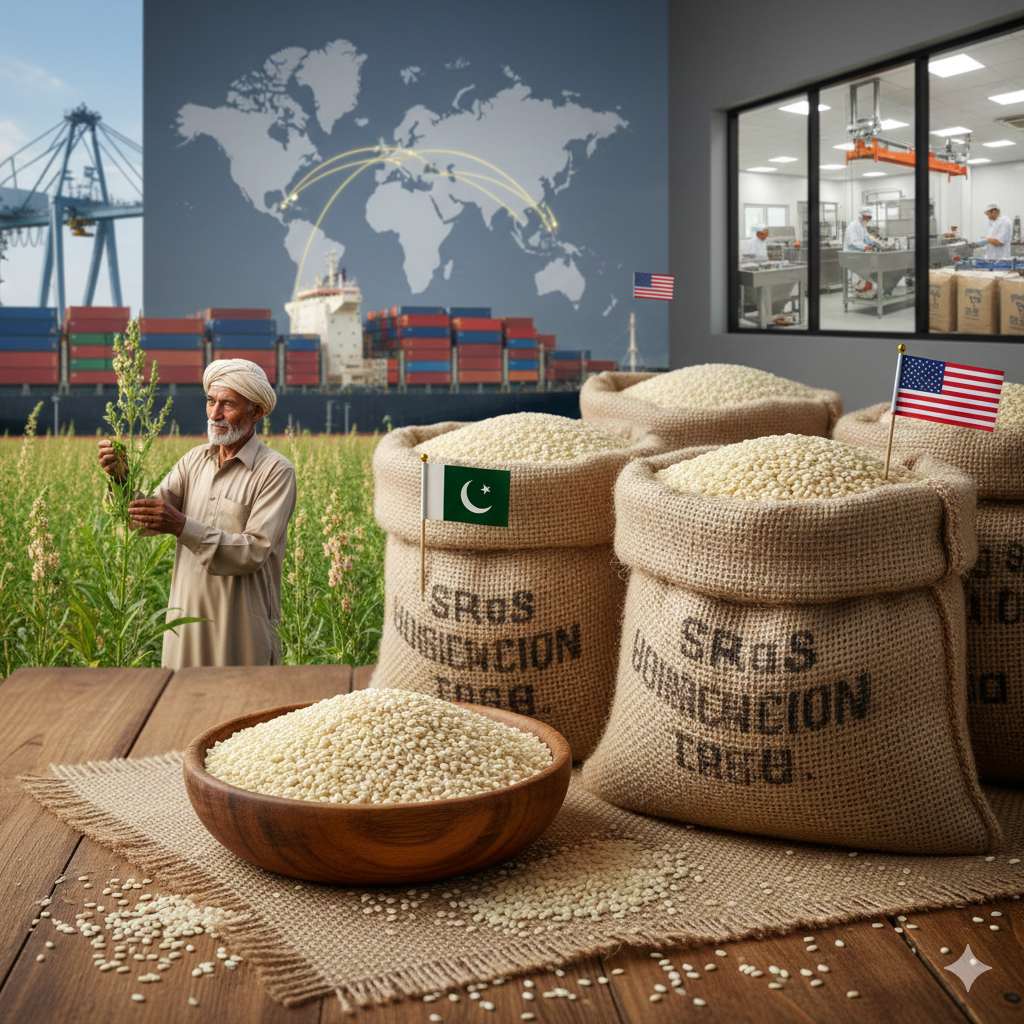
Global Sesame Demand and Its Influence on the Pakistani Market
What U.S. Importers, Food Processors, and Agri Buyers Need to Know
Sesame may look like a small seed, but it has become a big business in global agriculture.
From burger buns and bakery toppings to tahini, hummus, and cold-pressed cooking oil, sesame is now a key ingredient across the U.S. food industry. As American consumers move toward healthier oils, plant-based foods, and ethnic cuisines, sesame demand is rising faster than ever.
But here’s the reality.
The United States produces very little sesame locally. Most supply comes from imports. That means changes in countries like Chad, Nigeria, and Pakistan directly affect U.S. prices, availability, and contracts.
If you are a food manufacturer, wholesaler, or bulk buyer, understanding the global sesame market is essential for planning your sourcing strategy.
In this article, we break down current global trends, review key origin markets, and explain how Pakistan is becoming an important player in the international sesame trade.
Why Sesame Demand Is Growing Worldwide
Sesame is no longer just a traditional oilseed. It has become a high-value crop because of changing food habits and health awareness.
Key demand drivers
• Growth of plant-based diets
• Higher demand for natural and cold-pressed oils
• Expanding bakery and snack industries
• Popularity of Middle Eastern and Asian cuisines
• Increased use of tahini and hummus
• Organic and non-GMO product demand
In the United States especially, sesame is now used in:
• cooking oils
• salad dressings
• sauces
• protein snacks
• bakery toppings
• specialty health foods
This has led to steady growth in:
-
U.S. sesame seed import demand
-
sesame oil market USA
-
bulk sesame seed suppliers
-
food grade sesame distributors
Simply put, American consumption keeps increasing, and imports must fill the gap.
Global Sesame Market Overview
The global sesame market remains active but uneven across regions.
Some origins face tight supply, while others struggle with weak demand or policy challenges. These differences create price swings and supply risks for international buyers.
Let’s look at the main producing regions and what they mean for the market.
Key Sesame Origins and Supply Situation
Chad: Strong Middle Eastern Demand Supporting Prices
West African sesame from Chad continues to receive strong demand, particularly from Turkey and other Middle Eastern markets.
Current season production is estimated between 100,000 to 150,000 metric tons. However, early rainfall has created concerns about quality and yield.
Although China announced duty-free access for sesame and peanuts, delays in local implementation are limiting immediate export benefits.
What this means for U.S. buyers
When African supply tightens, prices increase globally. Importers in the U.S. often pay higher CIF rates and face limited availability for spot purchases.
Nigeria: Tight Stocks, Firm Prices
Nigeria remains one of Africa’s largest sesame exporters, but supplies are currently tight.
Most premium stocks are already in the hands of traders and stockpilers. Prices in Kano markets remain strong despite currency weakness.
With Ramadan demand approaching, additional buying from Middle Eastern markets is expected, which could tighten supplies even more.
What this means for U.S. importers
• fewer offers
• stronger prices
• longer lead times
This makes sourcing from alternative origins more important.
Pakistan’s Growing Role in the Global Sesame Trade
Pakistan is quickly becoming one of the most strategic sesame suppliers in South Asia.
Current market snapshot
• Karachi prices stable at PKR 9,700–10,200 per 40 kg
• Chinese buying around USD 950–960/MT
• New crop estimated near 150,000 MT
• Exports to China surged to 184,000 MT in late 2024
This sharp increase in exports shows that Pakistan is now capable of handling large international demand.
However, reduced planting may lower next season’s output to around 200,000–250,000 MT, compared to nearly 320,000 MT previously.
Why Pakistan Matters to U.S. Buyers
Pakistan offers several advantages that make it attractive to global importers:
Competitive pricing
Often more affordable than African origins during tight markets.
Good quality white sesame
Suitable for bakery, tahini, and oil extraction.
Flexible export channels
Active ports like Karachi support container shipments efficiently.
Growing export infrastructure
More suppliers are meeting international food safety and quality standards.
For U.S. businesses looking for:
-
bulk sesame seeds suppliers
-
sesame exporters
-
affordable sesame imports
-
food grade oilseed sourcing
Pakistan presents a reliable alternative source.
Sesame Demand in the United States
The U.S. food market is one of the biggest drivers of global sesame trade.
Where sesame is used most
• commercial bakeries
• fast food chains
• hummus and tahini brands
• edible oil producers
• organic food companies
• specialty grocery brands
Since domestic production is limited, most of this demand is covered by imports from Africa and Asia.
This creates steady opportunities for:
-
sesame seed importers USA
-
wholesale sesame oil suppliers
-
agri commodity traders
-
food manufacturers
As demand grows, companies that secure stable supply chains early gain a strong competitive advantage.
How Global Price Movements Affect U.S. Businesses
Sesame prices depend heavily on:
• weather conditions
• harvest size
• currency fluctuations
• export policies
• seasonal demand
When supply drops in Africa or Pakistan:
• import prices rise
• freight costs increase
• contract availability tightens
• profit margins shrink
For food processors, this directly affects production costs.
That’s why many U.S. companies now diversify sourcing instead of relying on a single country.
Smart Sourcing Strategies for Importers and Traders
If you operate in the sesame or edible oil business, here are practical steps to protect your margins.
Diversify origins
Source from Pakistan and Africa together to reduce risk.
Secure long-term contracts
Lock in pricing before peak demand seasons.
Focus on value-added products
Cold-pressed, organic, or roasted sesame offers higher margins.
Work with trusted suppliers
Reliable exporters and consultants help avoid quality and shipment issues.
The Future Outlook for Sesame Trade
Looking ahead, several trends are clear:
Short term:
• African supply remains tight
• prices stay supported
Medium term:
• Pakistan production changes may tighten supply
• U.S. consumption continues to grow
• premium sesame oil demand increases
Long term:
Sesame will remain an essential oilseed in global food supply chains.
Demand from the U.S. market is expected to stay strong, especially for healthy, natural, and plant-based food products.
Final Thoughts
The sesame market is no longer regional. It’s truly global.
A harvest in Africa or Pakistan now directly impacts food manufacturers and importers in the United States.
For American buyers, staying informed about origin markets is critical for securing stable supply and competitive prices.
Pakistan’s growing export strength makes it an important partner for international trade. As global demand increases, building reliable sourcing relationships will be the key to success.
At CropsShop, we help buyers and agri businesses connect with trusted sesame suppliers, understand market trends, and plan smarter procurement strategies.
If you’re sourcing bulk sesame seeds or sesame oil for the U.S. market, working with the right partner can make all the difference.
3 Comments
Aqsa Jabbar
Great analysis of Pakistan’s growing role in the sesame export market. It’s helpful to see real numbers and trade insights instead of general information. Definitely valuable for importers looking for alternative suppliers.
January 31, 2026Noman Haider
Excellent breakdown of the global sesame market. I really liked how you connected African supply trends and Pakistan’s exports with U.S. import demand. Very useful insights for anyone working in agri trade or food processing.
January 31, 2026Ali Abbas
This is one of the most practical articles I’ve read on sesame sourcing. The explanation of price movements and supply risks across different origins helps buyers plan much better. Clear, informative, and straight to the point.
January 31, 2026