February 17, 2026
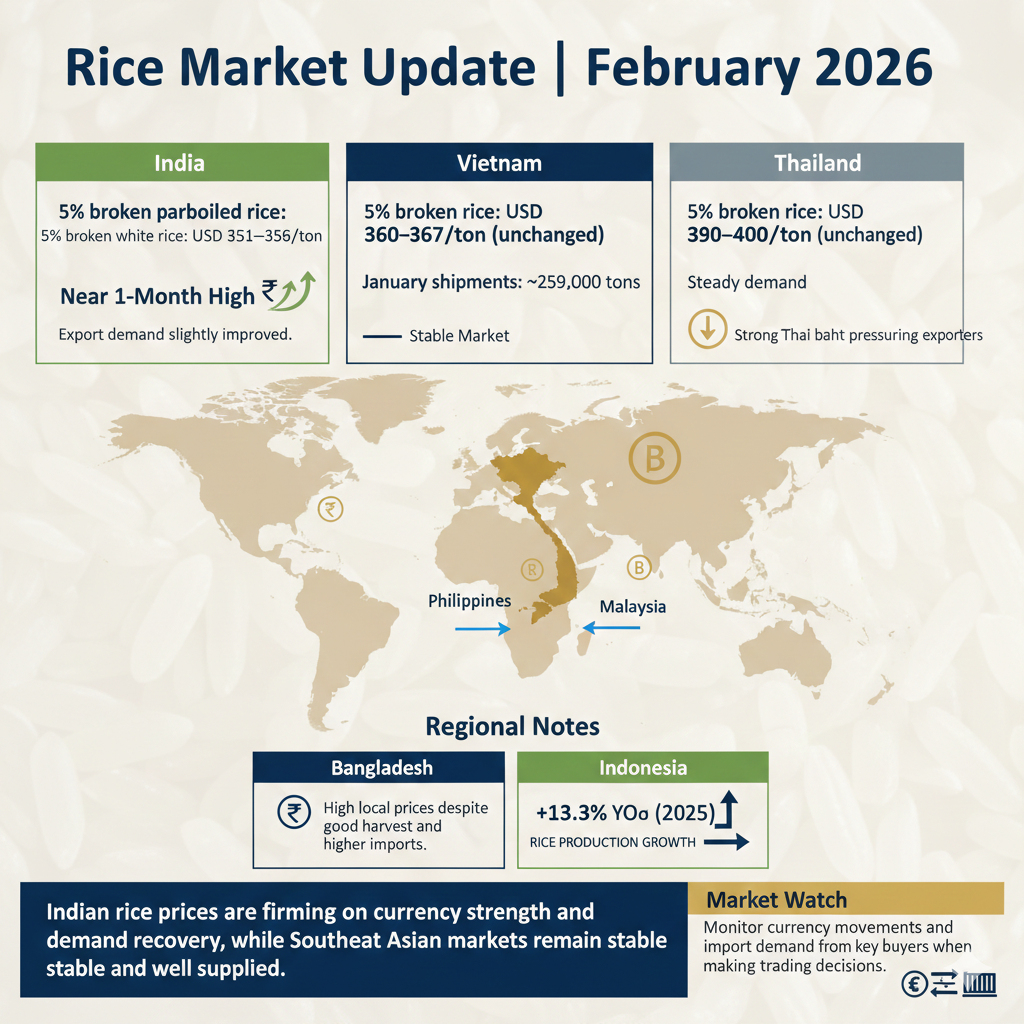
🌾 Rice Market Update | February 2026 India
5% broken parboiled rice: USD 353–359/ton
(Near one-month high; highest since Jan 8)
5% broken white rice: USD 351–356/ton
Market drivers:
Slightly stronger export demand
Rebound in Indian rupee, reducing exporters’ margins and supporting prices
Vietnam
5% broken rice: USD 360–367/ton (unchanged week-on-week)
January shipments: ~259,000 tons
Mainly exported to Philippines and Malaysia
Market sentiment:
Stable overall
Buyers remain cautious despite renewed Philippine purchases
Thailand
5% broken rice: USD 390–400/ton (unchanged)
Market conditions:
Ample supply
Steady demand
Exporters under pressure due to a strong Thai baht
Regional Notes
Bangladesh:
Domestic rice prices remain high despite good harvests and increased imports
Indonesia:
2025 rice output forecast: +13.3% YoY
Strong production expected to continue into early 2026
Bottom Line
Indian rice prices are firming due to currency strength and demand support
Southeast Asian markets (Vietnam & Thailand) remain well-supplied and stable
📌 Market Watch:
Traders and buyers should closely monitor currency movements and import demand signals from key consuming countries when making procurement and trading decisions.